Home / Best for / Sliding Glass Door
Scenario decision guide
Sliding Glass Door
What works across a large door without awkward lifting?
Direct answer
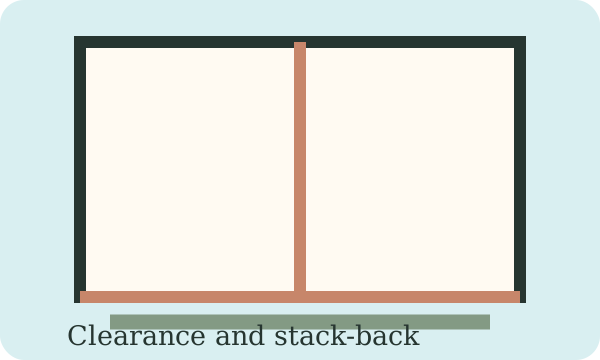
Vertical Blinds is the best overall starting point. Side-to-side travel makes the format practical for wide windows and sliding doors.
Decisive factors: Large-Opening Suitability, Clear View When Open, Upfront Affordability, DIY Installation Ease.
Three explained options
Best overall
Fit: Excellent fit
Why it stands out: Side-to-side travel makes the format practical for wide windows and sliding doors.
Decisive factors: Large-Opening Suitability, Clear View When Open, Upfront Affordability.
Concrete tradeoff: Vanes can separate or swing; appearance is more utilitarian for some users.
Installation: Confirm stack-back direction, track clearance and door-handle interference.
Strong alternative
Fit: Excellent fit
Why it stands out: Side-to-side travel makes the format practical for wide windows and sliding doors.
Decisive factors: Large-Opening Suitability, Clear View When Open, Upfront Affordability.
Concrete tradeoff: Requires lateral stacking space and does not offer fine slat-style tilt.
Installation: Confirm stack-back direction, track clearance and door-handle interference.
Practical alternative
Fit: Excellent fit
Why it stands out: A compact profile supports a wide range of opacity, glare and motor options.
Decisive factors: Large-Opening Suitability, Clear View When Open, Upfront Affordability.
Concrete tradeoff: Side and top light gaps can limit total blackout; chain systems require safety compliance.
Installation: Confirm stack-back direction, track clearance and door-handle interference.
What could change the answer?
Window depth, moving hardware and the room's primary use can change the practical result. Measure the actual opening and follow the chosen product's instructions.
How this was calculated
Recommendation record: Sliding Glass Door recommendation record · Weights: declared methodology dimensions · Tie handling: deterministic source order.
Numeric ratings are calculation detail only; visible recommendations describe the tradeoffs rather than raw scores.
Last reviewed: 2026-08-06 · Methodology version 2.0.0.