Home / Guides / Visible tilt rod versus hidden tilt shutters
Editorial automation guide
Visible tilt rod versus hidden tilt shutters
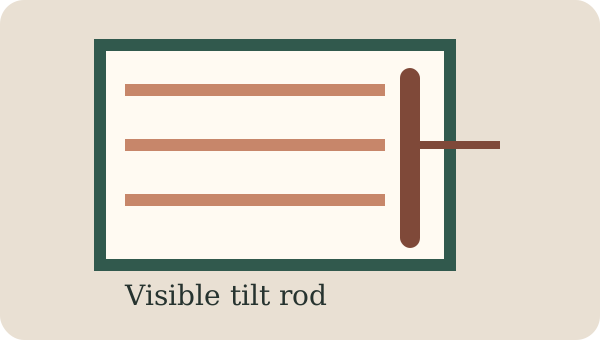
A visible tilt rod is an external bar connected to the louvers; a hidden tilt mechanism puts the linkage behind the louver edge. The distinction can change retrofit options and how a shutter is operated.
Quick answer
A visible tilt rod is an external bar connected to the louvers; a hidden tilt mechanism puts the linkage behind the louver edge. The distinction can change retrofit options and how a shutter is operated.
Published and reviewed: 2026-08-06 · By Shades, Shutters or Blinds? Editorial Team.
Step 1
Visible tilt rod
The rod provides an obvious place to see and feel the louver linkage. It may be easier to identify in a photo, but available mounting space and the rod’s travel still matter.
Step 2
Hidden tilt system
A hidden linkage can create a cleaner appearance. It may require closer inspection because the visible louver edge does not reveal how the actuator would connect.
Step 3
Why it matters for automation
Automation must reach the physical mechanism without blocking panel movement or creating an unsafe pinch point. Never infer compatibility from appearance alone.
Original project-owned diagram. It explains the mechanism conceptually; it is not an installation instruction.
Decision framework
Identify the physical motion.
Measure the opening, mechanism and clearance.
Check power, manual fallback and control ecosystem.
Verify the exact product or request compatibility review.
Common questions
Is a hidden tilt shutter better?
Neither is universally better; appearance, operation, service access and compatibility all matter.
What should I photograph?
Photograph the louver edge, panel face, frame, hinge side and the full window at multiple angles.
Supporting sources
Each source is scoped to the statement it supports. Manufacturer documentation reports what its publisher states; it is not presented as independent certification.